College life can be a lot—new routines, academic pressure, and distance from your usual support system. Our new study looked at how students intentionally use music in their everyday lives and what that might mean for stress, mood, and attention. We surveyed first- and second-year undergrads living on campus and asked about where, why, and how they listen to music—and how it affects them.
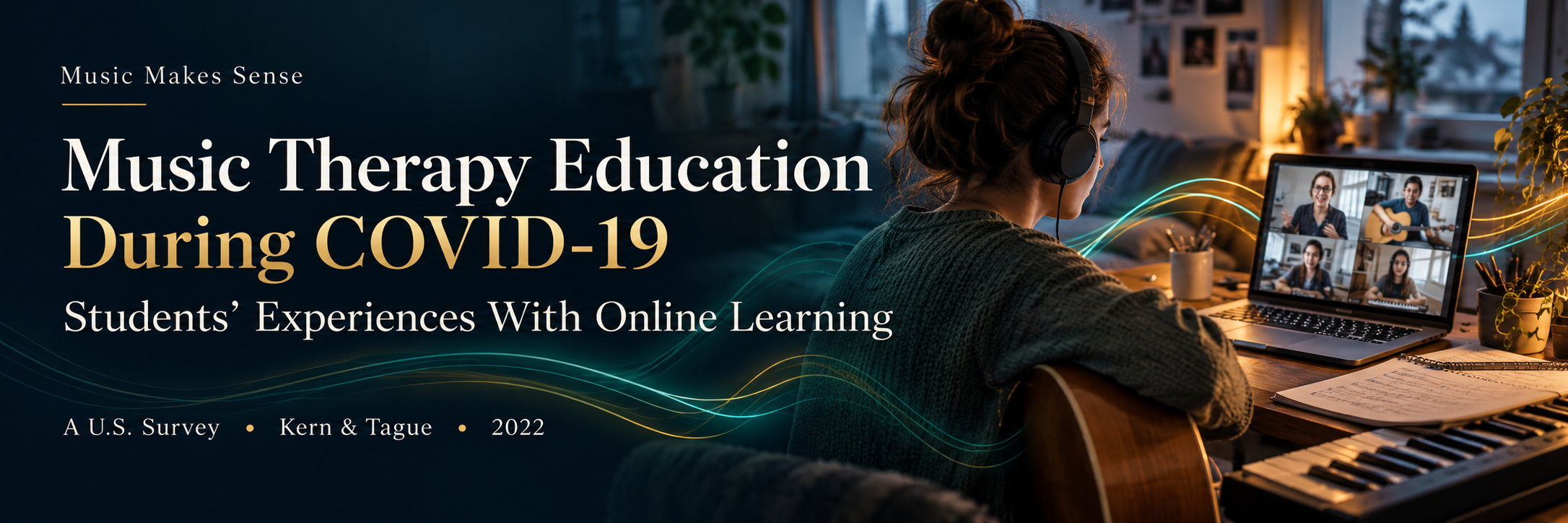
How did the sudden shift to online learning during COVID-19 affect music therapy students? In this national study, Dr. Daniel Tague and Dr. Petra Kern surveyed 230 students to explore the challenges, benefits, and lasting implications of remote education and clinical training. Discover what their findings reveal about the future of music therapy education.
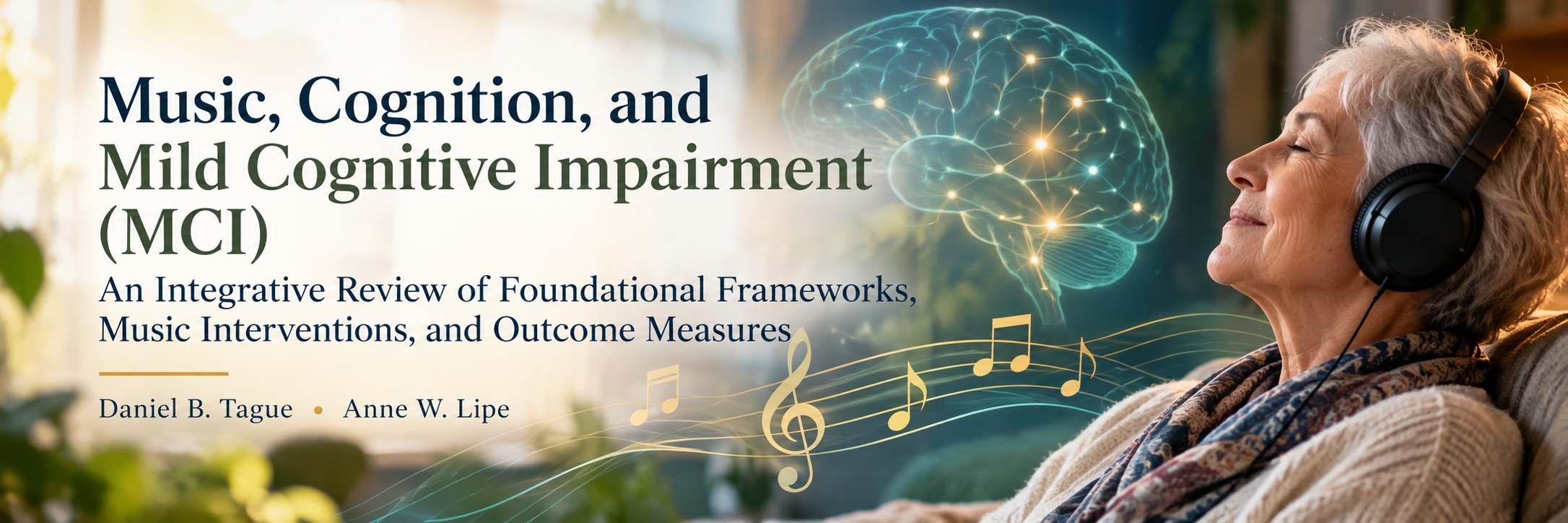
Can music help preserve memory and cognitive function in older adults experiencing mild cognitive impairment (MCI)? In this integrative review, Dr. Daniel Tague and Dr. Anne Lipe examined 13 studies to explore how music-based interventions target cognition—and whether the theories behind these interventions align with the outcomes being measured. Their findings highlight the promise of music while emphasizing the need for stronger theoretical foundations to guide effective, evidence-based music therapy.
What does the music therapy profession look like around the world, and what challenges and opportunities lie ahead? In this landmark international survey, Dr. Petra Kern and Dr. Daniel Tague gathered insights from 2,495 music therapists worldwide, revealing important trends in employment, clinical practice, professional recognition, and training. Despite challenges with funding and recognition, the findings highlight a profession filled with dedication, resilience, and hope for the future.